Punk Rock Jewellery Brand
Global E-commerce SEO
Increase in monthly organic traffic
Overview
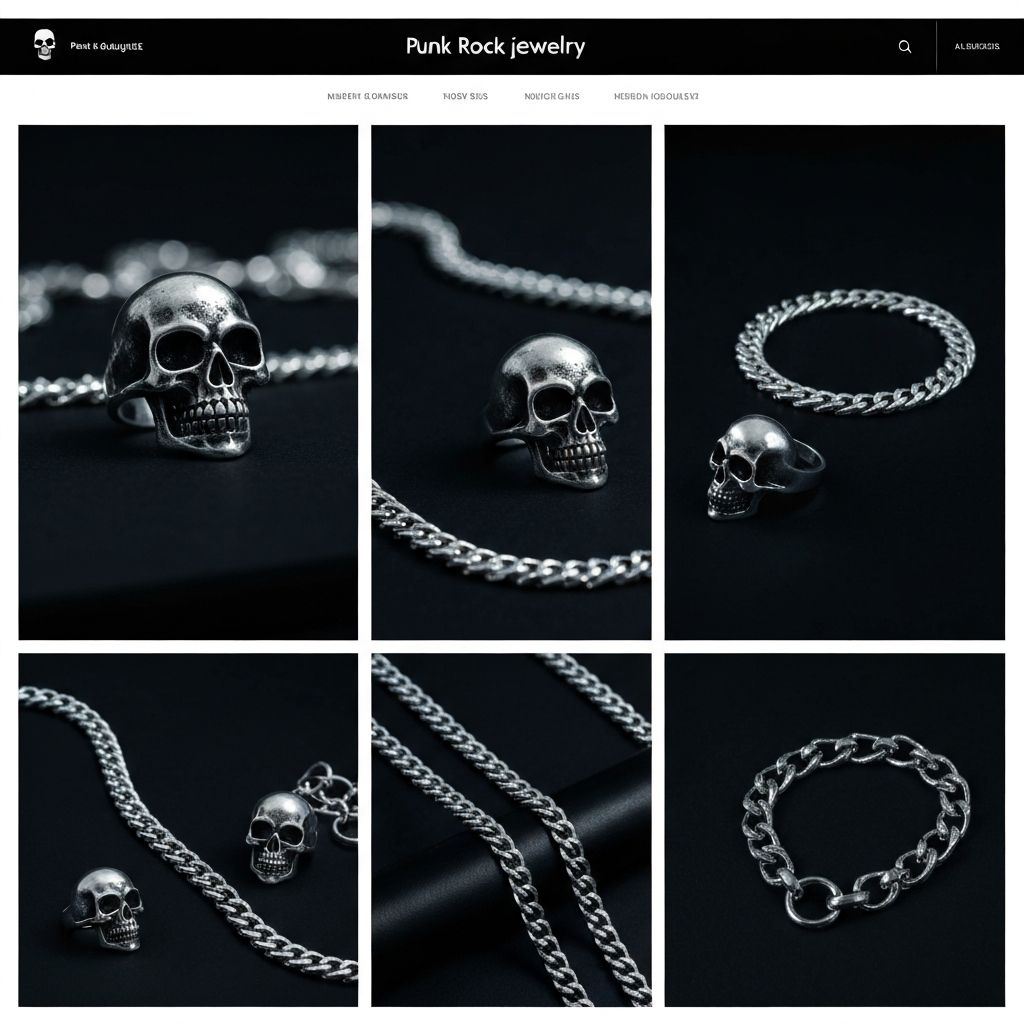
A punk rock jewellery brand, officially partnered with a major fashion jewellery company, approached Ivi SEO to expand their global reach and recover rankings lost during a platform migration from Shopify to WooCommerce. They wanted to cast a wider net to overseas audiences and, of course, make more money.
The Team

The Challenge
The client had a strong foothold in their Japanese market but struggled to expand globally. They'd recently suffered significant ranking drops after migrating from Shopify to WooCommerce during peak Christmas season. Their site was over-reliant on a handful of keywords, leaving them vulnerable to algorithm changes.
Key Pain Points
- 1Major ranking losses from poor platform migration
- 2Over-dependence on limited branded keywords
- 3Need to expand from Japanese market to global audience
- 4Recovery needed during competitive season
- 5Limited product page optimization despite strong UX
Our Strategy
We deployed a comprehensive e-commerce SEO strategy targeting branded product keywords across their entire catalogue. Unlike typical e-commerce campaigns that focus solely on category pages, we optimized every product page to rank for high-intent branded searches, while simultaneously building a content marketing engine to capture cold traffic.
Our Approach
- Optimized every product page for specific branded keywords
- Restructured category pages for broader keyword coverage
- Created strategic blog content targeting Q&A and educational keywords
- Implemented advanced internal linking structure
- Technical SEO improvements for page speed and Core Web Vitals
- Leveraged AI-assisted content creation for scale
The Results
Increase in monthly organic traffic
Growth in monthly revenue ($100k to $250k)
Monthly clicks (up from 12k)
Monthly impressions (up from 200k)
“The team at Ivi SEO delivered results that exceeded our wildest expectations. In just 6 months, they took our traffic from 12,000 to 60,000 monthly clicks and more than doubled our revenue. Their strategic approach to optimizing every product page, combined with smart content marketing, transformed our global presence.”
A Deeper Look
This client campaign was unlike anything we'd worked on previously.
Not only was the niche one that we hadn't worked in before (although it wasn't super out there, so that wasn't too hard) but because we would be looking to primarily target branded keywords.
Because of the nature of the site's business, being an officially partnered seller of the jewellery brand, we had a much better/easier time when it came to ranking for their desired keywords. As branded keywords aren't too difficult to pick up when you're an official partner.
MINUS the dinky little money sites who usually try to rank for 'jewellery brand ring review' etc and nothing else with their poorly optimised AI-generated product reviews.
Our client, however, was not some dinky little money site, they were one of 4 official 'partners' who were allowed to sell products from this brand, so ranking for branded keywords became easy peasy.
Or, maybe we're just that good?
This also meant we were bringing in 'hot' traffic, due to the nature of the keywords – which meant more bang for the client's buck. Not only that, but we could also spread ourselves much thinner – in a good way.
We could target lots of branded keywords, and would actually hit top spots fairly easily with some quick optimisation, as in most cases they were just waiting to be snatched up.
All of the above meant that the traffic rolled in fairly quickly, much to our client's delight. And as of writing this, they are STILL growing off of the work we implemented during this 6-month campaign.
What Did the Client Look Like Before We Opened A Can Of Whoop-Ass?
When this client was on our books, they were doing okay. Of course when you see the results we achieved with them, their previous state will look laughable. Though, they already had some good winners but were very one sided (if the main keyword they were ranking for ever dropped off a cliff, they were doomed), and their site was in a great spot when it came to page speed, UX and just overall 'brand feel'.
One of the best parts about this client site is that it was all ready to 'go' when it came to working on their SEO – they had just transferred from Shopify CRM to WordPress, and now were utilising WooCommerce as their Ecomm helper.
Some tweaks were made towards the end to help out with page speed, but other than that, everything was in perfect condition to open up a can of whoop-ass on their account.
You never usually get this lucky when it comes to SEO. Usually a client comes to you with a poorly optimised site (or none at all) and expects you to work miracles with little to no budget. But this one was a blank canvas that we got to work our magic on – and they were more than happy to let us run wild with it too.
The client was getting around 10-12k clicks per month, with around 180-200k impressions – pretty good by all accounts. You'll also notice there was a Wall Street crash-esque section when they switched from Shopify to WooCommerce.
For those eagle eyes out there – YES. THEY DID THIS DURING CHRISTMAS MONTH. Clients be clienting, sometimes, you know? Still to this day we don't know why you just wouldn't wait till January to make the switch when everyone's all out of cash. ANYWAY…
As you can see from the results, the site recovered quite well, but didn't really ever get back to the previous year levels it was at… Until we came in of course!
Planning Stage
Just like with any SEO client we take on, we like to have a little look around the site/brand to get a proper feel of what it's all about. At this point, we usually come up with some ideas as to the sort of products/services we should be ranking for, based on their previous campaigns, most popular items in the catalogue and what people are searching for in the SERPs.
This is before we see if the site is actually running well and makes sense from a UX point of view and all that other boring stuff. Though as you'll see further on, the site was set up quite well, so there wasn't much to 'fix'.
When it comes to figuring out opportunities for the site, we typically have a quick look at keywords they are ranking for via SEMRush (and Search Console) as well as keywords they COULD be ranking for too. Could in this context meaning that they have a product range that we could be ranking for, but the current pages we have (or lack of) aren't quite there yet in terms of SEO. And of course, what competitors are ranking for.
This is all very rough stuff, no real action plan gets put together at this point. Just scrappy bits of electronic notepads in a folder somewhere in our Google Drive ether.
Client input is always a must for us at this stage, because of course, you want to be on the same page when it comes to growing their site/business/brand. Their business is their little baby. And although we give plenty of care to how things turn out, as we're addicted to the results (the money we get paid is nice too) we don't give nearly as much as the parents (site owners) do.
So of course, we like them to shoot ideas or give us a general note on the direction they are looking to take the business as then we can be confident our visions are aligned. They'll also know the business way better than we do, so their ideas/thoughts/opinions are worth their weight in gold.
HOWEVER. In this instance, they essentially passed their account over and let us do what we wanted to do – with little to no input during the entire campaign except seeing if they were up or down when it came to page views on Search Console or $$$ on their WooCommerce graphs.
So yeah, this project was pretty hands off for them. As long as they were up, they'd be happy to pay their invoice. And as you've already seen, they were MASSIVELY up. So they never had any issue paying.
Keyword Research
We did a huge mix here; we went to the search console to see what we were already ranking for, which allowed us to see where we could get some quick wins. (Typically, if you're already ranking for a keyword, you might just need to tweak a page slightly to start seeing better results for said keyword.)
And then we used tools like SEMRush and Keywords Everywhere (Chrome addon) to find even more keywords to rank for. This process was pretty easy. As we already had the brand of products we wanted to rank for, so it was just a case of searching the brand, finding the related products and copying any keywords down that matched up with the products we were selling on the site.
On a typical campaign, this can take a lot more time as you're usually in the trenches hunting for keywords that your site can actually rank for – aka low-hanging fruits and not-so-competitive keywords. But because we were just looking for branded keywords, and as we've said in the beginning, there weren't many sites going after them, we were essentially copying down and going for any we could find.
Although the blog was going to be on the back burner, as it usually is in any campaign you start, we also had a look around for more generic keywords that we could convert into blog posts. Blogs are one of the best ways to get traffic to any site (and it's a bit more of our forte), so we thought it was worth the time to jot any down we could find whilst we were here.
There wasn't any special source here to find these. It was just a case of grabbing any low-hanging fruits, typical Q&A-type stuff related to jewellery. These were not brand-related as we wanted to bring in more 'cold traffic' of people who may have not heard about the brand.
This got put into a somewhat messy spreadsheet, as we laid out every category and every product page we wanted to optimise along with the keyword that we tracked down for it. We were not adding any of the content we intended to add to these product/category pages into this spreadsheet as we typically like to do this once we begin work on the page. We're better 'in the moment' writers we've found over the years, so this is why it was done this way.
Though, we did take note of any product/category pages we intended to internal link once we did begin work. We're not complete fools. Another sheet was created outlining any potential blog posts. Nothing too fancy here except noting down the main keyword, secondary keyword, topic of the blog and any useful links that would help future us craft the copy – this was usually in the form of competitors' content that we could use as 'inspiration' ;)
Optimising Category Pages AND PRODUCT PAGES
Now equipped with our keyword research, and knowing exactly what pages we wanted to optimise, it was time to begin doing so. But first, let us talk about why we did this, and how it may be slightly different to other e-commerce sites we've worked on in the past…
With any e-commerce site, the aim here is to get as much traffic as possible to product pages. NOW usually you will put all of your focus on category pages, as targeting these pages is way easier than targeting specific products as you can target a much wider range of keywords, bring in better leads (as they get to search through your collection, rather than be linked to one product), and these pages usually have much better SEO, so they are easier to rank for (because you have more internal links from products that link to this page & backlinks you acquire typically are linked to these pages).
Then, any traffic you do get, funnels down to your product pages. The general strat at this point, once you have a user on your category page, is to then place your best selling products at the very top of the page, as they are most likely to be clicked.
Example; Say you're targeting furniture, you're going to want to capture anyone looking for 'mirrored bedside tables' rather than a more specific term that fits perfectly with the product that you're selling. From a client's point of view, they get more bang for their buck, as optimising a single category page will take as much time as it would to optimise a product page, and depending on the scale of the site there are going to be way way more product pages that you could waste time putting work into, for little upside.
THIS DOES NOT MEAN YOU SHOULD NEGLECT YOUR PRODUCT PAGES BECAUSE YOU'RE NOT TRYING TO GET THEM TO 'RANK'. It simply means that they would not be the focus of your efforts.
Now, did we do that for this site? No. Because as we've said, we were targeting branded keywords on specific products, so it was worth the time spent to update any and all product pages that had their own unique search volume as we were looking to ACTUALLY rank these individual product pages on the SERPs, rather than their parent (category) pages, although we were successfully doing that too.
So it was well worth the effort. SPOILERS: This process worked, and page views skyrocketed across the board.
But wait, what does the optimisation process look like? The usual things were done here; a better fitting meta title, meta desc, and of course, adding content to the bottom of the page that would improve the UX &, allow us to get our main keyword (and sometimes secondary) in an organic way.
And of course, adding any internal links to pages we wanted to boost with SEO juice (typically their parent page, and any hot products within the same category). There wasn't too much thought put into the content we wrote for these pages except that we wanted to make sure it actually provided value, as well as giving us a good excuse to add the internal links we mentioned earlier.
We've had plenty of experience writing such content previously on other clients' accounts, so this was fairly easy – wafflin' has become sort of a talent of ours after being freelance copywriters for a few years. So yeah, not so sexy but this is what SEO looks like.
For things like URLs, new pages, images, UX and anything else you optimise at this point, they were all completely acceptable and we found no reason to change them.
Blog Posts
After all of the site's product & category pages were optimised and there were no glaring SEO holes in their site, it was time to tackle the blog side. Now, their blog before we got it rolling, was pretty much non-existent.
Blog posts are very much our forte, and before the world of AI, we were copywriters who would write 10k words a day for clients. Some of the content we wrote we're not really proud of, but whatever keeps the lights on, right? And at least it allowed us to hone our skills. Anyway…
For this campaign, as we've already stated previously, we had hunted down keywords of low hanging fruits of general Q&A questions that people may have surrounding jewellery; and then we wrote blogs that would answer these questions. Simple enough. Think of the blog content as a glorified Quora page.
Once the content was written, we would then flesh it out with product images from our catalogue (as well as adding the correct links). The intention of these blogs WAS NOT to sell products, despite what you may think, they were simply written to be helpful to the reader (the absolute number one priority for anything you write in SEO) and also make them aware of the brand by name dropping items and the brand name whenever we could. In an organic way of course.
With this, we were bringing in new cold 'leads' outside of the hot 'leads' we were already getting to the site thanks to ranking for branded product keywords. Even if no products would ever be bought doing this (they were) it would still be in their consciousness AND we were still providing value to the reader – we might even capture sales from these same people months into the future (we did).
And anyway, extra traffic never hurt anyone, did it? SEO is all about diversifying your site so that you are getting traffic from multiple sources (pages). If you put all your eggs in one basket (relying on one major keyword to bring in traffic) and Google wakes up one day and smashes your site down the SERPs for that keyword, it's going to be a rough day at the office. Anyway, that's a different rant for a different time.
On top of the above, these blogs allowed us to make sure we were updating the site with fresh content every month. This is what Google is constantly looking out for (as a positive ranking signal) whilst providing value and getting our brand in front of new readers who may do business with us in the future.
Tech Changes
If you're more of a writer than you are a tech side SEO, this part of the campaign will most likely scare you and have your head on a spin due to the annoyance it can be to try and figure out what all the tech issues your site may be having, actually mean.
For this campaign, this was one of the first times we had any sort of input outside of just installing a cache plugin. Now thankfully, we had a dev team at our disposal so we didn't have to actually implement any of these changes ourselves, but we did still have to scour PageSpeed Insights, jot the errors down and outline our recommendations to solve the issues.
We still had to bang our heads against a wall just a little as we wanted to understand what it was we were actually writing, most of it over our head and straight to the dev team. We have no doubt that in the future we will have to get a better understanding of such issues. We can do this easily of course. We would never doubt our abilities, but only when the time calls for it. We try to live a stress-free life as much as possible, ha.
One thing we did discover in the last few months with Google Pagespeed Insights, it can pick up if you have certain plugins installed on your site, and then it will recommend the fixes based on what settings you should change within the dashboard of this plugin. For example, one of our other clients had a plugin called WPRocket on their site, page speed insights picked this up and did exactly this. This made the whole process SOOOO MUCH EASIER.
We're not sure if there is a comprehensive list of what plugins pagespeed insights can pick up, but we know this is definitely one of them. (It's a really good plugin, we would 100% recommend it for anyone looking to get the best page speeds and UX from their site without too much trouble.) Whilst we're on the topic of recommending plugins, Perf Matters is another good plugin to help you with the ease of making your site function as good as possible without too much hassle. You're not going to see Google recommend settings like you will with WPRocket, but it's still a great plugin for your WordPress site nonetheless.
We haven't mentioned all the boring stuff that gets done for every campaign. Such as sticking the site through an audit service and fixing all the errors like missing meta descs, meta titles, broken links etc etc. This is all standard stuff really, and you'll find that you'll run into such errors on any site, regardless if it's a WordPress site, Shopify site, new or old. The best way to find these errors (and the thing you should be doing at the very start of your campaign, outside of getting to grips with what the site is all about) is to use a service like SiteBulb to weed them out, and then follow the recommended fixes for them.
What About Backlinks?
Not a dollar was spent on backlinks. The client wanted them initially, as clients generally do (they think it's some black magic-esque SEO technique to get quick wins), but we recommended against it until we properly optimised the pages as we were super confident we would see movement ASAP.
Which of course, we did. Right now, we think it would be a great time to add to their backlink profile since at this point it's just a case of adding 10-ish blogs to the site every month, so we have plenty of free time to hunt down for some opportunities when it comes to links.
AI, Did We Use It? (Yes, and It's Great)
For this site, we experimented a lot more with AI than we had in the past – mostly because AI at this point is actually really good. We remember joking with colleagues about 5 years ago about how pathetic AI really was, and how many decades we were probably out from it being useful at all when it comes to SEO and writing.
Back then, your choice was either some crappy text spinbot, or some other crappy text spinbot. So we had little hope. But now look at the landscape, kids are using AI as if it were Google. You can pump out full blog posts with pretty good quality in seconds.
The question is, did we use AI for this site? Yes. For the category pages we spoke about earlier, almost all of the content was generated by AI – now we're not going to tell you the sort of input engineering techniques we were using to get the quality outputs. We just want to touch on how AI has been really good for this project. Despite how negative SOME people (and SEOs) are about AI.
We of course were the overseers when it came to the outputs, but we were more like its assistant, rather than it being our assistant, which was the case a few years ago when we were using tools like Jasper (previously Jarvis). We still had to add the internal links to the content, but we pretty much gave it our desired site structure, the main keyword we wanted the content to contain and then we just let it do its thing. It worked out wonderfully.
For the blogs, we wrote all of those ourselves, as that's what we enjoy doing but we could have easily used AI to help out with this since it's one of its strengths. Anyway, the point of this section was to say this; AI is great if you know how to use it properly. And you can get yourself some great results too. If you're a hater, stay mad. Either figure out how AI and SEO can work as one or be left behind by the ChatGPT nerds like us.
Final Words
This has been a long one, and we think we've pretty much said everything we've wanted to say throughout this case study. And do we REALLY need to say anymore? The results speak for themselves.
Overall, this has been one of the best projects we've worked on due to the fact that it's basically ALL went as planned, although the results are WAAAAY better than we could've ever imagined. A great time was had overall, and we can only hope we get more similar sites to work on in the future.
Ready to achieve similar results?
Let's discuss how we can help your business grow.